


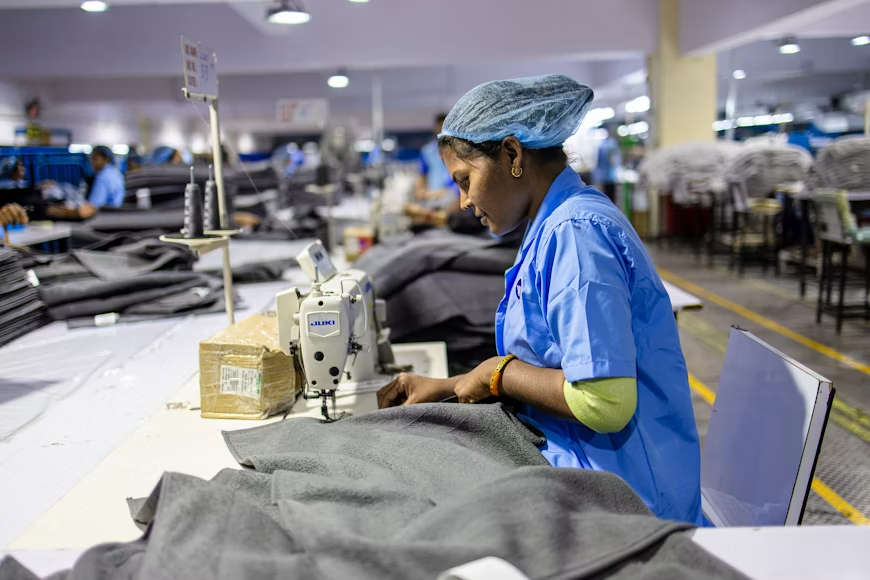
In today’s fast-paced and highly competitive global market, the role of buying houses has become more crucial than ever. Acting as a bridge between local manufacturers and international brands, buying houses simplify sourcing, ensure quality, and streamline communication. Especially in countries like Bangladesh, India, Vietnam, and China, buying houses have transformed the way global apparel and product supply chains operate.
What is a Buying House?
A buying house is an intermediary company or agent that represents international buyers (brands, retailers, or importers) and connects them with local manufacturers. Their main role is to manage sourcing, production, quality control, compliance, and logistics on behalf of the buyer.
Buying houses are particularly prominent in industries like garments, textiles, leather goods, handicrafts, and consumer products. They help global brands access cost-effective manufacturing while maintaining quality standards.
Why Buying Houses Matter
Global brands often face challenges when sourcing directly from factories in foreign countries. These challenges include language barriers, lack of market knowledge, quality concerns, and production delays. Buying houses solve these issues by offering local expertise and operational support.
For local manufacturers, buying houses open doors to international markets. Small and medium factories that may not have global connections can access large buyers through these intermediaries.
Key Functions of a Buying House
1. Supplier Sourcing
Buying houses identify reliable and capable manufacturers based on the buyer’s requirements. They evaluate factories based on production capacity, quality standards, compliance, and pricing.
2. Price Negotiation
They negotiate prices between buyers and manufacturers to ensure a fair deal. Since buying houses understand local market conditions, they can secure competitive pricing.
3. Product Development
Buying houses often assist in sampling, design modifications, and product development. They ensure that the final product matches the buyer’s specifications.
4. Quality Control
One of the most critical roles of a buying house is maintaining product quality. They conduct inspections at various stages of production to ensure compliance with buyer standards.
5. Production Monitoring
Buying houses track production timelines and ensure that orders are completed on time. They coordinate between factories and buyers to avoid delays.
6. Compliance & Certification
Global brands require strict compliance with ethical, environmental, and safety standards. Buying houses ensure factories meet these requirements.
7. Logistics & Shipping
They manage documentation, packaging, and shipping processes, ensuring smooth delivery of goods to international destinations.
Benefits for Global Brands
Cost Efficiency
Buying houses help brands source products at competitive prices by leveraging local market knowledge.
Reduced Risk
With quality checks and compliance monitoring, buying houses reduce risks related to defective products or unethical practices.
Time Saving
Brands can focus on marketing and sales while buying houses handle sourcing and production.
Local Expertise
Understanding cultural, legal, and operational aspects of the local market is essential, and buying houses provide that expertise.
Benefits for Local Manufacturers
Access to Global Markets
Buying houses connect factories with international buyers they otherwise wouldn’t reach.
Increased Orders
Manufacturers can secure consistent business through buying house networks.
Technical Support
Buying houses often guide manufacturers in improving product quality and compliance standards.
Business Growth
Long-term partnerships with buying houses can lead to sustainable growth and global recognition.
Challenges in the Buying House Model
While buying houses provide many benefits, there are also challenges:
- Transparency Issues: Sometimes, unclear pricing structures can lead to trust issues.
- Dependency: Manufacturers may become overly dependent on buying houses.
- Communication Gaps: Miscommunication between buyers and factories can still occur.
- Margin Pressure: Buying houses take commissions, which can impact profits.
However, with professional management and ethical practices, these challenges can be minimized.
The Role of Technology
Modern buying houses are increasingly using technology to improve efficiency. Tools like ERP systems, supply chain software, and digital quality inspection platforms help streamline operations.
Online communication tools, real-time tracking, and AI-driven analytics are also enhancing transparency and decision-making. Digital transformation is making buying houses more reliable and efficient than ever.
Bangladesh: A Growing Hub for Buying Houses
Bangladesh has become one of the leading sourcing destinations in the world, especially in the garment sector. The country’s competitive pricing, skilled workforce, and strong manufacturing base make it attractive to global brands.
Buying houses in Bangladesh play a key role in connecting local factories with international buyers from the USA, Europe, and beyond. They ensure compliance with global standards while maintaining cost efficiency.
Future of Buying Houses
The future of buying houses looks promising, but it is evolving. Buyers are demanding more transparency, sustainability, and speed. As a result, buying houses must adapt by:
- Embracing digital tools
- Ensuring ethical sourcing
- Building strong supplier relationships
- Offering end-to-end supply chain solutions
Sustainability is also becoming a major focus. Eco-friendly production, reduced carbon footprint, and ethical labor practices are now essential requirements for global brands.
Conclusion
Buying houses play a vital role in the global supply chain by bridging the gap between local manufacturers and international brands. They simplify sourcing, ensure quality, and help both buyers and manufacturers grow.
In a world where efficiency, quality, and compliance are critical, buying houses are no longer just intermediaries—they are strategic partners. Whether you are a global brand looking for reliable sourcing or a local manufacturer aiming to expand internationally, working with a professional buying house can be a game-changer.
As the global market continues to evolve, buying houses that embrace innovation, transparency, and sustainability will lead the way in shaping the future of international trade.